
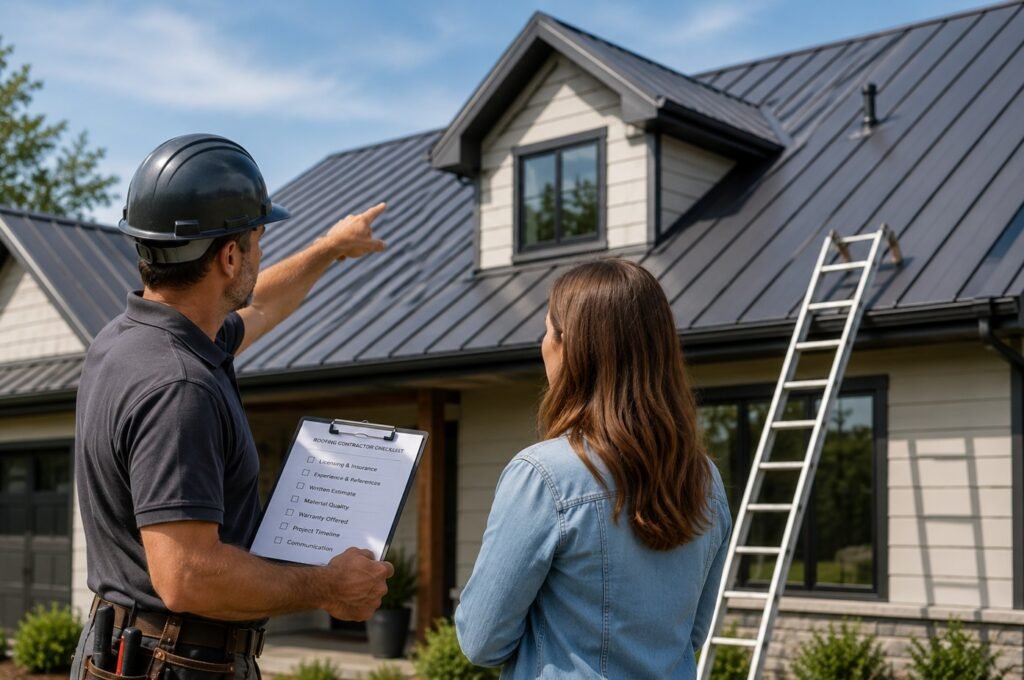
Choosing a new roof is a significant home renovation decision, but selecting the material is only part of the process. Even high-quality metal roofing can perform poorly when it is incorrectly measured, detailed, fastened, flashed, or ventilated. The contractor responsible for installation therefore deserves just as much attention as the roofing product itself.
If you have started searching for metal roofing near me, you may already have discovered dozens of local companies offering apparently similar services. Prices can vary considerably, and every contractor may describe their system as durable and professionally installed.
The challenge is working out which company has the experience, qualifications, processes, and attention to detail required for your particular home.
Rather than choosing based on the lowest quote or the most impressive advertisement, take time to evaluate how each contractor approaches the complete roofing project.
Understand Your Project Before Contacting Contractors
You do not need to become a roofing expert before requesting estimates, but having a basic idea of what you want makes conversations with contractors more productive.
Start by considering why you are replacing the roof.
Is the existing roof reaching the end of its useful life? Are there leaks or storm damage? Are you renovating the entire exterior and looking for a different architectural style? Are energy efficiency and long-term maintenance important priorities?
Next, think about the type of appearance you want.
Modern residential metal roofing is available in numerous profiles and finishes. Standing seam systems create a clean architectural appearance, while metal shingles and other profiles can provide a more traditional look.
You can also think about colour, roof drainage, insulation, ventilation, solar panels, skylights, and any other work that may need to happen at the same time.
You do not need final answers yet. A good contractor should help you refine these decisions.
Look Specifically for Metal Roofing Experience
Roofing experience and metal roofing experience are not necessarily the same thing.
A company may have installed conventional roofing products for decades while completing relatively few metal projects.
Metal roofing involves particular detailing around seams, fasteners, valleys, penetrations, ridges, edges, flashing, and transitions. Manufacturers may also specify particular installation procedures for their systems.
When speaking with potential contractors, ask how much of their work involves metal.
Find out which metal systems they install regularly and whether their crews have experience with the particular profile you are considering.
A contractor who primarily installs one roofing material but occasionally accepts metal projects may not provide the same level of specialist knowledge as a company that works with metal routinely.
Search Locally, but Don’t Stop at the Search Results
Typing metal roofing near me into a search engine is a sensible starting point because local contractors are more likely to understand regional weather conditions, common building styles, permit requirements, and locally available materials.
However, proximity alone does not establish quality.
Treat the search results as a shortlist rather than a recommendation.
Visit company websites and look for evidence of completed residential metal roofing projects. Check how long the company has operated and whether it provides a physical business location and clear contact information.
Look beyond polished marketing photographs.
The goal is to establish whether the contractor has a consistent history of doing the type of work your renovation requires.
Ask Friends and Neighbours for Recommendations
Online research is useful, but personal recommendations can provide information that advertisements cannot.
If someone in your neighbourhood has recently installed a metal roof, ask about the experience.
Did the contractor arrive when expected? Was communication clear? Did the final cost match the agreed estimate? Was the property kept reasonably organised during construction? How did the company respond when questions or problems arose?
Most importantly, ask whether the homeowner would hire the same contractor again.
Local recommendations are particularly useful because you may be able to see the completed roof in person.
A roof that has been exposed to several seasons can tell you more than a carefully selected photograph taken immediately after installation.
Verify Licensing and Registration Requirements
Contractor licensing requirements vary by location.
Some jurisdictions require roofing contractors to hold specific licences, while others regulate contractors differently at state, provincial, county, or municipal level.
Do not simply assume that a company appearing online has completed every required registration.
Ask what licences or registrations apply to your project and request the relevant information.
Where an official government verification system exists, check the details independently.
You should also confirm who will obtain any required building permits. A professional contractor should be able to explain which permits are necessary and how the process will be handled.
Be cautious if someone suggests avoiding a permit that local authorities require simply to reduce cost or save time.
Confirm Appropriate Insurance
Roofing involves people working at height, handling heavy materials, and operating around your property. Insurance is therefore an important part of contractor selection.
Ask prospective contractors to provide current evidence of appropriate insurance coverage.
Depending on your location, this may include general liability insurance and workers’ compensation or an equivalent form of workplace coverage.
Do not rely solely on a verbal statement that the company is insured.
Ask for documentation and confirm that it applies to the contractor completing the project.
Requirements differ by jurisdiction, so homeowners should check what protections are expected locally.
Ask Who Will Actually Install Your Roof
The salesperson providing the estimate may not be the person who arrives on installation day.
Some roofing companies employ their own installation teams. Others work with subcontractors. Neither arrangement is automatically good or bad, but you should understand who will be responsible for the work.
Ask whether the crew is employed directly or subcontracted.
Find out who supervises the project and who you should contact if you have questions during installation.
It is also worth asking how experienced the crew is with your chosen metal roofing system.
A company’s reputation ultimately depends on the people performing the installation, so understanding the crew structure can help you evaluate what you are actually paying for.
Review Previous Metal Roofing Projects
A contractor should be able to show examples of relevant completed work.
Do not settle for generic roofing photographs if you are planning a specific metal system.
If you are considering standing seam roofing, ask to see standing seam projects. If your home has complicated valleys, dormers, chimneys, skylights, or multiple roof levels, look for examples involving similar details.
Pay attention to the finishing work.
Look at panel alignment, roof edges, flashing, ridges, valleys, and transitions.
These details often reveal more about workmanship than a wide photograph of the finished house.
When possible, ask whether there are completed projects you can view from a public location.
Speak With Previous Customers
References can provide another useful layer of reassurance.
Ask shortlisted contractors whether they can provide recent customer references where appropriate and permitted.
When speaking with a previous customer, ask questions about the entire project rather than simply asking whether they were satisfied.
Was the estimate accurate? Did the project begin and finish approximately when expected? How well did the contractor communicate delays or unexpected issues? Was cleanup handled properly?
Also ask whether any problems appeared after completion and, if so, how the contractor responded.
How a company handles a problem can sometimes tell you more than a project where everything went perfectly.
Read Reviews With a Critical Eye
Online reviews can be useful, but individual ratings should not determine your decision.
Look for patterns.
Repeated comments about strong communication, punctuality, cleanliness, workmanship, or after-sales support are more meaningful than one enthusiastic review.
The same applies to negative feedback.
One complaint may result from unusual circumstances. Multiple customers reporting similar problems with unexpected charges, missed appointments, poor communication, or unresolved leaks deserve closer attention.
Also look at how the company responds to criticism.
Professional, constructive responses can indicate that the contractor takes customer service seriously.
Get Several Detailed Quotes
Obtaining multiple estimates gives you a better understanding of the likely project cost and helps identify differences between contractors.
However, comparing only the final price can be misleading.
One estimate might include premium panels, upgraded underlayment, removal of the existing roof, disposal, flashing replacement, ventilation improvements, and permit costs.
Another may provide only the basic installation.
Ask for written estimates with enough detail to understand what is included.
Ideally, you should be able to identify the roofing system, material, finish, preparation work, underlayment, flashing, labour, disposal arrangements, and other major project components.
Once you understand the scope, price comparisons become far more meaningful.
Be Careful With Extremely Low Quotes
A significantly cheaper quote can be tempting during an expensive renovation.
It can also be a warning sign.
The contractor may be quoting a different material specification, excluding necessary preparation, allowing less labour time, using inexperienced crews, or leaving important items out of the estimate.
That does not mean the highest quote is automatically the best.
Instead, investigate why prices differ.
Ask each contractor to explain what is included and which circumstances could increase the final cost.
A transparent explanation is more valuable than choosing whichever number appears smallest at the bottom of the page.
Ask Exactly Which Metal Roofing System Will Be Used
“Metal roof” is not a complete specification.
Different products use different metals, coatings, profiles, panel dimensions, fastening systems, and installation methods.
Ask the contractor to identify the proposed manufacturer and product.
You should also understand whether the system uses exposed or concealed fasteners and why that system is appropriate for your house.
Discuss panel thickness or gauge where relevant, finish, corrosion protection, colour, and any product-specific requirements.
If several options are available, ask the contractor to explain the practical differences rather than simply describing one as “better.”
The right specification depends on architecture, climate, budget, roof geometry, and expected service conditions.
Discuss Underlayment and the Roof Deck
The visible metal is only one part of a roofing assembly.
Beneath it are components that can have a significant influence on moisture management and overall performance.
Ask what underlayment the contractor proposes and why.
Discuss how the existing roof deck will be inspected and what happens if damaged or deteriorated sections are discovered after removal of the old roofing.
This is also a good time to ask how unexpected deck repairs will be priced.
Having a process agreed in advance can prevent confusion if concealed damage becomes visible once work begins.
Don’t Ignore Ventilation and Insulation
Roof replacement provides an opportunity to consider the performance of the entire roof assembly.
Poor attic ventilation or inadequate insulation can contribute to uncomfortable indoor temperatures and moisture-related problems.
Ask the contractor whether existing ventilation appears appropriate and whether the new roofing system requires any changes.
Depending on the property, a roofing contractor may recommend consulting another building professional for insulation or ventilation improvements.
The important point is to avoid treating the metal panels as an isolated decorative layer.
A successful roof needs to work with the rest of the building envelope.
Ask How Flashing Will Be Handled
Many roofing problems occur around transitions and penetrations rather than across large uninterrupted areas.
Chimneys, skylights, vents, valleys, dormers, walls, roof edges, and plumbing penetrations all require careful detailing.
Ask contractors how these areas will be handled.
Will existing flashing be reused or replaced? What materials will be used? How will metal panels terminate around walls and penetrations?
If your roof has unusual architectural features, ask to see examples of similar work.
Good metal roofing is highly dependent on careful detailing, so this is not an area to treat as a minor finishing task.
Consider Your Local Climate
A roofing system should be appropriate for the conditions it will face.
Homeowners in snowy areas may need to discuss snow movement, ice, drainage, and structural considerations. Coastal properties may require particular attention to corrosion resistance and compatible materials.
Hot climates raise questions about solar reflectance and heat management.
High-wind regions require careful attention to system approvals, fastening, edge details, and local code requirements.
A knowledgeable local contractor should be able to explain how these factors affect the recommended system.
This is another advantage of searching for metal roofing near me rather than selecting a contractor with little experience in your region.
Ask About Manufacturer Training
Some metal roofing manufacturers provide training, certification, or approved-installer programmes.
If the proposed product has such a programme, ask whether the contractor participates.
Manufacturer training does not replace references, insurance, experience, or good workmanship, but it can provide additional evidence that the contractor understands the particular system.
You can also contact or check the roofing manufacturer’s official resources where installer information is available.
Be careful with vague claims such as “certified” unless the contractor can explain exactly who issued the certification and what it covers.
Understand the Warranty Before Signing
Roofing projects may involve more than one type of warranty.
The manufacturer may provide coverage related to the roofing product or finish, while the contractor may provide a separate workmanship warranty.
These are not necessarily interchangeable.
Ask for written warranty information before committing to the project.
Find out what is covered, how long coverage lasts, what exclusions apply, and what maintenance may be required.
Also ask whether warranty coverage is transferable if you sell the house.
Most importantly, understand who you contact if a problem appears.
A long warranty period sounds impressive, but the details determine how useful that protection actually is.
Check the Contract Carefully
Once you select a contractor, make sure the important project details appear in writing.
The contract should clearly describe the agreed scope.
Depending on the project, this may include the roofing product, colour, removal of existing materials, underlayment, flashing, ventilation work, disposal, permits, estimated schedule, payment arrangements, warranties, and procedures for changes.
Read the payment schedule carefully.
Avoid relying on verbal promises for significant parts of the project.
If something matters enough to influence your choice of contractor, ask for it to be reflected in the written agreement.
Ask How Changes Will Be Approved
Roofing renovations can uncover unexpected conditions.
Damaged decking, hidden moisture, structural issues, or previous poor-quality repairs may only become visible after existing materials are removed.
Ask what happens in this situation.
A good contract should establish a process for change orders or additional work.
You should understand how the contractor will document the issue, explain the proposed solution, provide pricing, and obtain approval before proceeding where practical.
This process helps prevent an unexpectedly large final invoice.
Discuss the Project Schedule
Weather makes roofing schedules difficult to guarantee precisely, but the contractor should still be able to provide a reasonable estimate.
Ask when the work is expected to begin and approximately how long installation should take under normal conditions.
Find out what happens if rain or severe weather interrupts the project.
How will exposed areas be protected? Where will materials be stored? How will delays be communicated?
If the roof replacement is part of a larger renovation involving siding, solar panels, windows, gutters, or exterior painting, coordination becomes even more important.
Consider How the Site Will Be Managed
Roof replacement can temporarily turn part of your property into a construction zone.
Ask where dumpsters, trailers, equipment, and materials will be positioned.
Discuss how the contractor protects landscaping, windows, driveways, patios, and other exterior features.
If you have children or pets, find out how the work area will be managed.
Cleanup should also be discussed.
Ask whether removal of old roofing, packaging, metal offcuts, fasteners, and general construction debris is included in the quoted price.
Good site management may not change the finished roof, but it can make the renovation experience considerably easier.
Think About Gutters and Drainage
A new roof may interact with your existing gutter system differently from the old one.
Ask whether gutters need to be removed during installation and whether they will be reused or replaced.
Discuss how water will move from the new roof into gutters and downpipes.
For some metal roofs in snowy climates, snow retention may also need consideration to help manage sliding snow around entrances, walkways, and other vulnerable areas.
Drainage should be planned as part of the roof rather than treated as a separate decorative accessory.
Mention Future Solar Plans
If you think solar panels may be installed in the future, tell the roofing contractor before selecting the final system.
Certain metal roof profiles can work particularly well with solar mounting solutions, but attachment methods vary.
Planning early may help avoid unnecessary roof penetrations or awkward panel layouts later.
It also allows you to consider the relative expected service lives of the roof and solar system.
The same principle applies to future skylights, vents, or other rooftop equipment. Changes are usually easier to accommodate when they are considered before the roof is installed.
Look Beyond the Roof Colour
Colour matters because the roof occupies a large portion of the home’s exterior appearance.
But choosing the right contractor also means finding someone who can help you think about the complete design.
Consider how the metal will look alongside brick, stone, timber, siding, render, windows, doors, and gutters.
Ask for physical colour samples where possible.
View them outdoors rather than relying entirely on photographs or computer screens.
Look at samples during different times of day, as sunlight and surrounding materials can noticeably influence how a finish appears.
A contractor experienced with residential metal roofing may also be able to show completed local projects using similar colours.
Watch for High-Pressure Sales Tactics
A major roof renovation should not require an instant decision.
Be cautious if a salesperson insists that a substantial discount is available only if you sign immediately.
You should have enough time to review the scope, compare estimates, verify credentials, understand warranties, and ask questions.
Also be cautious about contractors who appear after storms and pressure homeowners into immediate agreements without giving them an opportunity to verify the business.
Professional contractors should be comfortable with informed customers.
A reasonable evaluation process protects both sides.
Pay Attention to Communication
The quoting stage often provides an early indication of what working with a company may be like.
Does the contractor arrive when promised?
Do they answer questions clearly?
Are estimates delivered when expected?
Do they explain technical issues in understandable language rather than avoiding them?
Do they respond to emails or calls?
Roofing projects involve many decisions and sometimes unexpected complications. Clear communication becomes especially valuable when circumstances change.
A contractor who is difficult to reach before receiving your deposit may not become easier to contact once construction begins.
Compare Value Rather Than Price Alone
The right contractor is not necessarily the cheapest or most expensive.
Look at the complete package.
Consider experience with metal systems, quality of materials, proposed roof assembly, insurance, references, communication, warranties, project management, and price.
A slightly higher estimate may represent better materials, more careful preparation, experienced labour, stronger warranties, or a more complete scope.
Conversely, a premium price should be supported by meaningful advantages.
Ask enough questions that you understand what you are receiving for your money.
Questions to Ask Before Hiring
Before making the final decision, make sure you can answer the most important questions about each contractor:
- How much experience do you have installing this type of metal roofing?
- Can you show me comparable completed projects?
- What licences, registrations, and insurance apply to this project?
- Who will actually perform and supervise the installation?
- Which manufacturer and roofing system are you proposing?
- What underlayment and flashing details are included?
- How will damaged roof decking be handled?
- What permits are required, and who obtains them?
- What product and workmanship warranties are provided?
- How are additional costs or change orders approved?
- What is included in cleanup and disposal?
- What payment schedule is required?
- How will weather delays be managed?
- What happens if I experience a problem after installation?
You do not need the contractor to give the answer you expect to every question. What matters is receiving clear, specific explanations that allow you to make an informed comparison.
Final Thoughts
Finding the right contractor is one of the most important parts of a successful metal roofing renovation.
Begin locally. Searching metal roofing near me can help identify contractors familiar with regional weather, building requirements, commonly used materials, and local architectural styles. But do not make proximity or search ranking your final selection criteria.
Investigate each company’s actual metal roofing experience. Verify applicable licensing and insurance. Review completed projects, speak with previous customers where possible, compare detailed written estimates, and understand both manufacturer and workmanship warranties.
Pay particular attention to what happens beyond the visible metal panels. Roof decking, underlayment, ventilation, flashing, penetrations, drainage, fastening, and careful installation all contribute to how well the completed roof performs.
Most importantly, choose a contractor who is willing to explain the project clearly rather than rushing you toward a decision.
A metal roof is intended to be a long-term improvement. Taking additional time to select the right installer can help ensure that your investment improves not only the appearance of your home, but also its protection, durability, and overall performance for years to come.